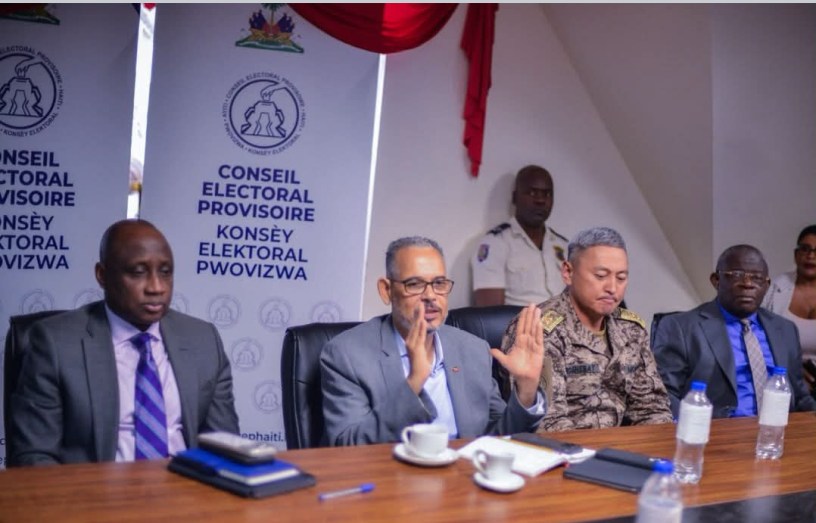
PORT-AU-PRINCE — Le Premier ministre haïtien, Alix Didier Fils-Aimé, a présidé une réunion stratégique de sécurité le mardi 13 octobre 2026. Cette séance de travail de haut niveau s’est tenue au siège du Conseil électoral provisoire (CEP), réunissant les principaux responsables de la sécurité nationale et de l’organisation des futurs scrutins.
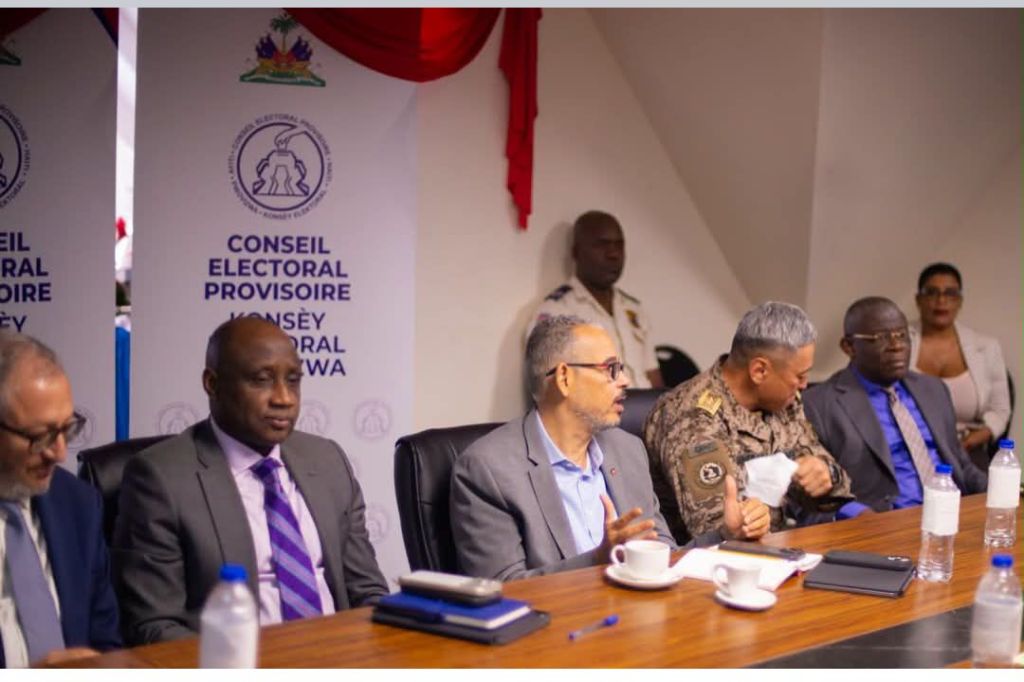
L’objectif principal de cette rencontre était de dresser un bilan complet de la situation sécuritaire à travers le pays. Les discussions ont également porté sur la planification et les mesures logistiques indispensables à mettre en place pour garantir des conditions de sécurité optimales avant la tenue des prochaines élections.
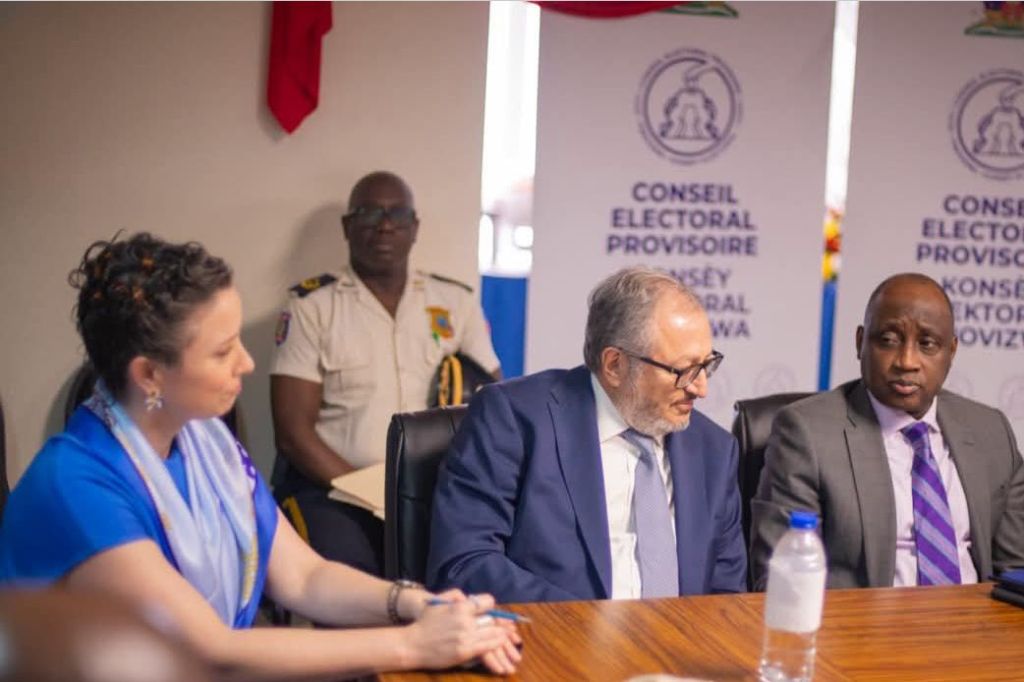
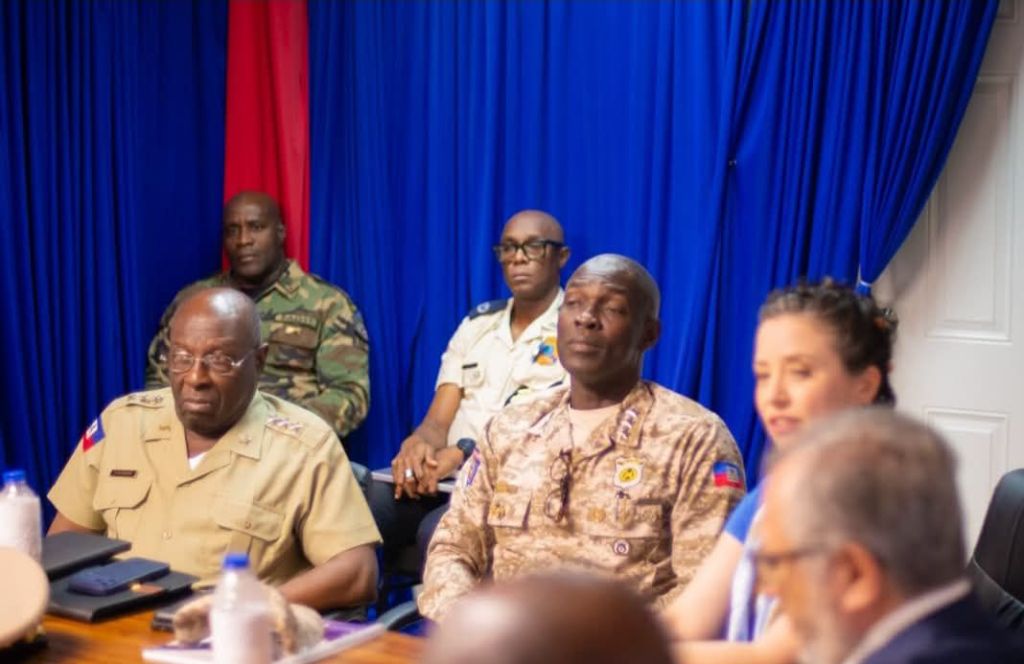
Pour cette évaluation cruciale, le chef du gouvernement s’est entouré des plus hauts responsables de la sécurité nationale : le ministre de la Défense ainsi que les commandants en chef de la PNH, des FAd’H et de la FRG. Cette collaboration interinstitutionnelle doit fournir au CEP une cartographie précise et fiable de la situation sécuritaire actuelle.
À l’issue des échanges, le Gouvernement a formellement réitéré son engagement à collaborer activement avec l’ensemble des institutions partenaires. L’ambition affichée reste la création d’un climat de paix publique, impératif non négociable pour organiser des joutes électorales crédibles, inclusives et démocratiques.
La Primature a rappelé à cette occasion que le rétablissement de la sécurité nationale ainsi que le retour effectif à l’ordre constitutionnel demeurent les priorités absolues au cœur de son agenda politique.


There are a wide variety of opinions, analyses, and debates among different segments of society and in the outside world regarding Türkiye’s domestic and foreign policy, press freedom, social media restrictions, and international relations. The issues you mentioned are widely discussed both within Turkish public opinion and among Turkish communities abroad, as well as international analysts. These complex agenda items and ongoing debates can be summarized as follows:
Press Freedom and Social Media Debates
• Criticisms and Reactions: Sanctions against media organizations, broadcasting bans imposed on television channels, or access restrictions (bandwidth reduction, closure, etc.) imposed on social media platforms are described by international human rights organizations, the opposition, and a segment of society as « obstruction of the right to information » and « repression. » This situation is also frequently criticized in international human rights reports. • Government and Supporters’ Viewpoint: The government and its supporters argue that such steps are taken in accordance with legal regulations under the headings of « national security, » « protection of public order, » « combating disinformation, » and « combating terrorist propaganda. »
Early Elections and Debates on the Government
• Opposition and Voter Demands: Due to economic indicators, criticisms of the justice system, and administrative practices, opposition parties and some voters frequently demand early elections, questioning the legitimacy of the current administration. • Current Administration’s Position: The ruling bloc emphasizes that elections should be held at the normal time, that the country needs stability, and that the will expressed at the ballot box should complete the term. Regarding relations with US presidents, it is stated that Türkiye follows an independent line in foreign policy and that diplomacy between leaders is conducted in line with the country’s interests.
Foreign Policy and Military Initiatives
• Regional Risks and Reactions: Türkiye’s military and diplomatic presence in the Middle East, the Gulf region, or other international crisis areas can be viewed with concern and criticized, particularly among citizens living abroad, in terms of security, economic costs, and humanitarian risks. • Strategic Priorities: State administration and geopolitical analysts argue that Türkiye’s cross-border and regional moves are unavoidable diplomatic and military necessities to protect the country’s long-term strategic interests, ensure the security of energy pipelines, and avoid being directly affected by regional instability. How Türkiye will emerge from these challenging processes depends on domestic political consensus, the success of economic reforms, the functioning of democratic institutions, and the balanced and multifaceted diplomatic strategies pursued in foreign policy.
J’aimeAimé par 1 personne