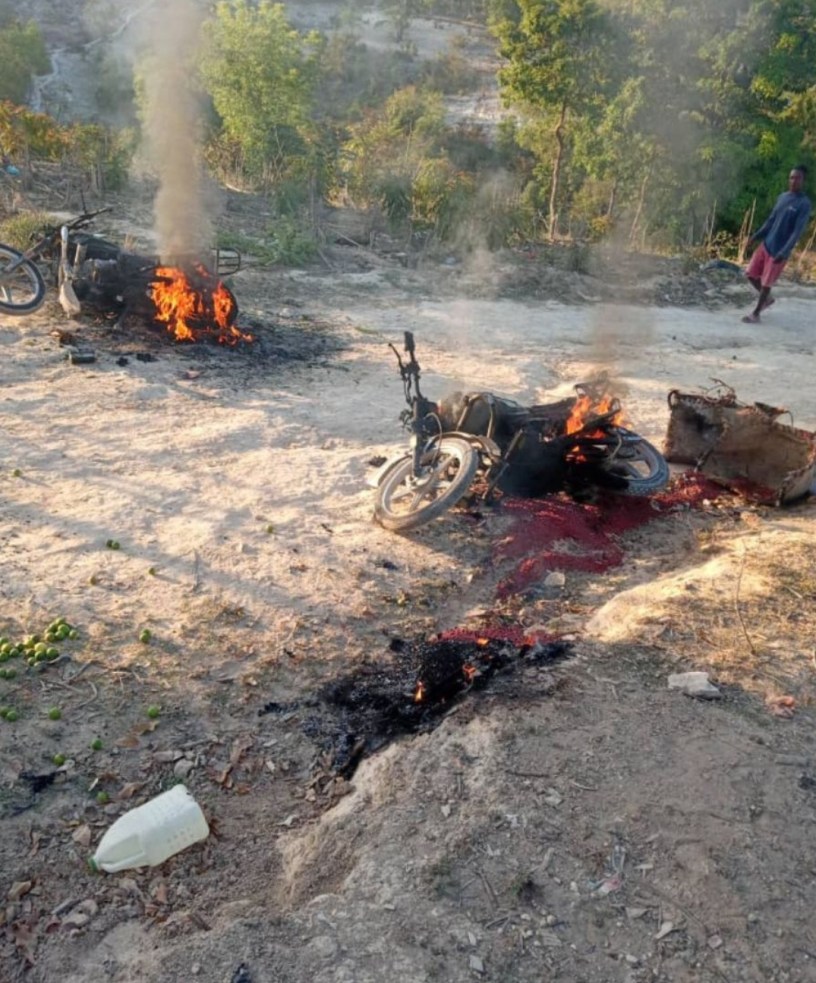
SAINT-MARC – Le samedi 9 mai 2026, l’horreur a atteint un nouveau sommet dans la 4e section communale de Saint-Marc. Une incursion sanglante du gang de Savien a laissé derrière elle un paysage de désolation : au moins neuf blessés par balle et des exécutions d’une cruauté rare.
L’attaque a débuté à l’aube, ciblant particulièrement la localité de Robert. Le mode opératoire témoigne d’une barbarie absolue. Ainsi, trois motocyclistes ont été abattus avant d’être brûlés vifs avec leurs véhicules. En plus de ces exécutions, plusieurs maisons ont été incendiées, forçant des dizaines de familles à fuir sous les tirs d’armes automatiques pour échapper au brasier.
Ce tronçon, devenu un axe vital pour relier Saint-Marc à Verrettes et Désarmes, paie le prix fort d’une stratégie sécuritaire défaillante. Cette offensive serait une réponse des gangs à une opération menée la veille par la Police Nationale d’Haïti (PNH) à Jandeni. Si l’initiative visait à reprendre le contrôle, l’absence de périmètre de sécurité post-opération a laissé la population civile seule face à la vengeance des criminels.
s’agit de la cinquième attaque d’envergure contre cette communauté en quelques mois. Face à ce qu’ils qualifient d’« abandon d’État », les citoyens pointent des responsables précis :Alix Didier Fils-Aimé (Chef du CSPN) : Critiqué pour ses voyages à l’étranger jugés sans impact sur la sécurité intérieure.André Jonas Vladimir Paraison (DG a.i. de la PNH) : Accusé de passivité et de privilégier sa survie politique au détriment d’un plan d’action concret contre les « seigneurs de guerre » du Bas-Artibonite.
À l’heure actuelle, la 4e section communale reste totalement vulnérable, livrée à la loi des gangs de l’Artibonite.
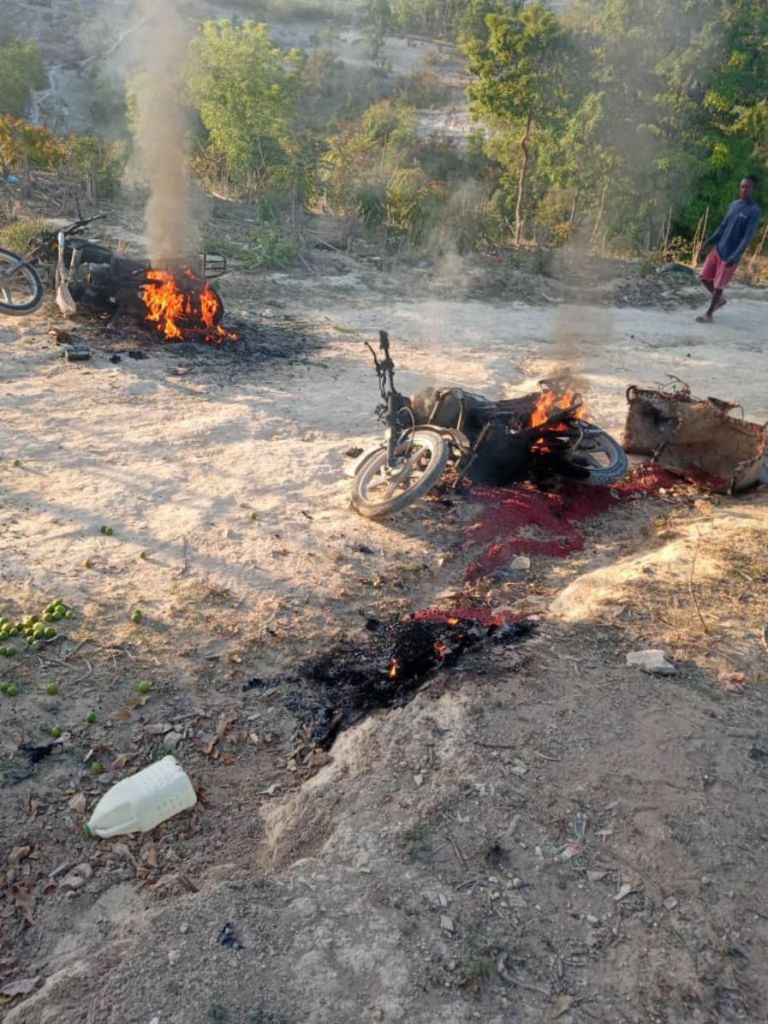


MODERN DIPLOMACY: Turkey: AKP’s Winning Streak Ends, Erdoğan Has Lost
Since coming to power in Türkiye in 2002, the conservative Justice and Development Party (AKP) has enjoyed a continuous winning streak: winning every election (with 49.83% support in 2011), effectively controlling the military which was above the civilian government, and reforming the country. The situation in the country was stable (especially compared to the crises and unrest of the 1990s), the economy was growing rapidly, Türkiye’s position in regional politics was strengthening, and Ankara’s importance on the international stage was increasing. This situation encouraged the ruling class to make long-term plans extending to the centenary of the republic in 2023. Over the next decade, Turkey under AKP rule was projected to become one of the global economic and political centers, a full member of the EU, and a political and economic leader in the Middle East. However, the oppressive policies and never-ending economic chaos ultimately destroyed the AKP. Because the AKP couldn’t reverse this deterioration, it reverted to an autocratic regime, and this autocratic turn led to its downfall.
However, negative developments in the last few months, both domestically (mass protests, the stalled Kurdish issue, and the failure of the constitutional amendment attempt) and internationally (the war in Syria and the coup in Egypt), have revealed the limitations of the AKP’s rule and have affected the government’s democratic authority, its prestige and credibility in the international arena, as well as its peace, order, and internal security.
Compared to the beginning of 2013, how the situation in Türkiye will develop is now certainly less predictable. Possible scenarios include both relative peace (though socio-political tensions exist in the background) and the threat of instability. Therefore, while the AKP will likely remain the single largest political force, it will face challenges that will determine not only its political future but also the direction the country will develop. However, a comprehensive solution to the accumulated problems and a simple return to the old order, which would be convenient for the government, does not seem likely in the foreseeable future.
Gezi Park protests: Social tensions are rising.
The protests that began in Istanbul in late May and were repeated on a smaller scale at irregular intervals throughout this autumn were the first sign of public discontent under AKP rule being expressed so openly. The protests stemmed from a local issue (resistance to plans to demolish Gezi Park in central Istanbul). However, it quickly transformed into mass political demonstrations, spreading to most major urban centers, with participants expressing their resistance to police brutality, self-censorship in the media, Prime Minister Recep Tayyip Erdoğan’s arrogant, arbitrary, and confrontational style of politics, and the government’s decisions on moral issues (including restrictions on alcohol sales).
From a broader perspective, the protest was a manifestation of dissatisfaction among a segment of the population (particularly the secular middle class) with Türkiye’s political system. While Turkey is democratic in terms of electoral procedures, it is far from a liberal democracy in terms of its political culture and value system. This clearly distinguishes the Gezi protests from the ‘Arab Spring’ (a social uprising against decades of dictatorship and poverty) with which they are compared, and brings them closer to the tradition of protest movements existing in the Western world.
These protests did not undermine support for the ruling party; The Prime Minister’s uncompromising stance was met with approval among the conservative segment of Turkish public opinion (according to Metropolitan data, the AKP’s approval rating was 43.2% in July compared to 35.3% in June). However, these protests led to increased domestic tensions, widespread social polarization, a rise in negative voter sentiment against the AKP (which did not translate into increased support for any of the existing opposition parties), and a significant deterioration of the government’s international image.
Therefore, the government is attempting to regain the initiative. On September 30, Prime Minister Erdoğan announced the contents of the Democratization Package, aimed at improving democratic standards in the country. Some elements of this package contain decidedly significant changes compared to the previous history of the Republic of Turkey. These include the complete removal of restrictions on dress codes for civil servants (the headscarf issue) (excluding the judicial system and law enforcement), allowing the opening of private schools that provide education in languages other than Turkish (in response to the national aspirations of the Kurdish minority), the right of ethnic minorities to campaign in their languages, and lowering the percentage of support a party receives in an election (from 7% to 3%) in order to receive funding from the state budget.
J’aimeJ’aime