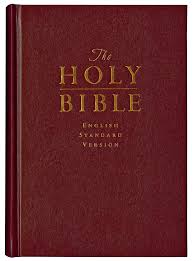
Depuis des siècles, la Bible demeure l’un des ouvrages les plus lus et les plus influents au monde. Bien au-delà de son aspect religieux, elle est considérée comme une véritable source de réconfort, de sagesse et d’inspiration pour des millions de personnes.
Dans un monde souvent marqué par l’incertitude et les difficultés, de nombreux croyants se tournent vers ses versets pour trouver la paix intérieure. Des passages comme « L’amour est patient, il est plein de bonté » (1 Corinthiens 13:4) rappellent l’importance des valeurs humaines fondamentales telles que l’amour, la patience et le respect.
Par ailleurs, la Bible encourage la confiance et le courage face aux épreuves. Le verset « Fortifie-toi et prends courage » (Josué 1:9) est souvent cité pour motiver ceux qui traversent des moments difficiles. Il agit comme une lumière discrète, guidant les pas de ceux qui doutent ou qui souffrent.
Au-delà de la foi, ces écrits traversent les générations et les cultures. Ils inspirent également la littérature, la musique et même les discours politiques, prouvant leur portée universelle.
Aujourd’hui encore, que ce soit dans les églises, les foyers ou sur les réseaux sociaux, les paroles bibliques continuent de résonner. Elles offrent à chacun un refuge, une réponse ou simplement une lueur d’espoir dans les moments d’obscurité.
En somme, la Bible reste un pilier spirituel et culturel, dont les enseignements, simples mais profonds, touchent le cœur humain et nourrissent l’âme.
 SEFIROT24
THE COLLAPSE OF JUSTICE IN TURKEY: NATIONAL COUNCIL:ENGLAND Ertuğrul Demirözcan April 02, 2026 Overview The World Justice Project (WJP) has published its 2026 Rule of Law Index. It ranks Türkiye 118th out of 143 countries; this represents a one-rank drop compared to 2024. The findings highlight the continuous erosion of judicial independence, accountability, and fundamental rights in the country, placing Türkiye among the lowest both globally and regionally: 14th out of 15 countries in the Eastern Europe and Central Asia region, and 37th out of 41 upper-middle-income countries. Among 143 countries, it is one rank lower than in 2024. The findings highlight the continuous erosion of judicial independence, accountability, and fundamental rights in the country, placing Türkiye among the lowest ranked globally and regionally: 14th out of 15 countries in the Eastern Europe and Central Asia region, and 37th out of 41 upper-middle-income countries. The WJP Index evaluates countries across eight categories: Restrictions on Government Power, Absence of Corruption, Open Government, Fundamental Rights, Order and Security, Regulatory Enforcement, Civil Justice, and Criminal Justice. Key Findings: Overall Ranking: 118th out of 143 countries (a drop of 1 place compared to 2024). Regional Ranking: 14th out of 15 countries (Eastern Europe and Central Asia). Income Category Ranking: 37th out of 41 categories (Upper Middle Income). Restrictions on Government Power: 136th (a decrease of 41 since 2015). Fundamental Rights: 134th (a decrease of 38 since 2015). Turkey, which ranked 80th in 2015, has dropped 38 places since then. The sharpest decline occurred after the 2016 coup attempt, when Turkey fell 19 places to 99th. Judicial independence continues to weaken following the mass dismissal of more than 4,000 judges and prosecutors after 2016. The transition to a presidential system in 2018 further reduced political and judicial oversight of executive power. Context and Concerns The International Court of Justice attributes the decade-long decline in Türkiye’s rule of law standards to the consolidation of power under President Recep Tayyip Erdoğan. Key concerns include: Politicization of the judiciary: Replacement of experienced judges with appointments loyal to the AKP. Use of courts as a weapon: Frequent use of legal instruments to target journalists, mayors, and opposition figures. Suppression of opposition: Prosecutions on charges of “insulting the president” and “disinformation.” Pressure on opposition mayors: Arrests and appointments of trustees following the 2024 local elections. Restrictions on media and artistic freedom: Bans, fines, and censorship targeting critical publications and individuals. The WJP’s findings, reflecting a systemic collapse of institutional checks and balances, identify Türkiye as one of the countries experiencing the sharpest long-term decline in the rule of law. Tags: Rule of Law · International Court of Justice · Turkey · Hizmet Movement · Judicial Independence · Human Rights · Accountability · Governance
Comments
J’aimeJ’aime